

Enhanced Dynamic Range MS Reveals Metabolic Communication in HCC
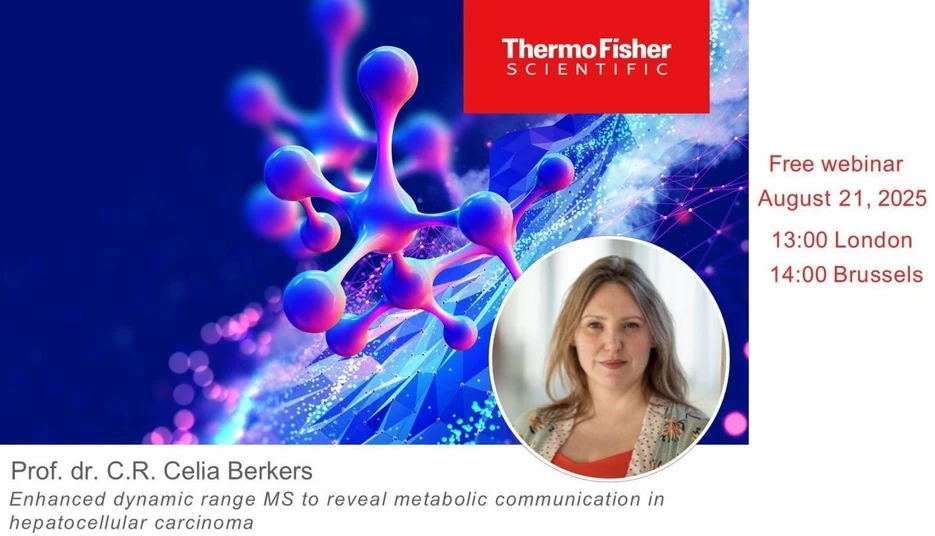
This presentation explores the use of Enhanced Dynamic Range (EDR) mass spectrometry (MS) to investigate metabolic communication in hepatocellular carcinoma (HCC). EDR MS significantly improves the detection and quantification of metabolites by enhancing the signal-to-noise ratio and peak shapes, making it possible to identify low-abundance metabolites that were previously undetectable. This advancement provides deeper insights into crucial metabolic pathways, such as the valine pathway, cholesterol metabolism, and folate metabolism, which are vital for cancer cell growth, proliferation, metastasis, and drug resistance.
The study underscores the importance of understanding metabolic rewiring in HCC to identify novel drug targets. Utilizing advanced MS equipment like the Thermo Scientific Orbitrap Excedion Pro, researchers can achieve a more comprehensive view of cancer metabolism. The findings highlight the potential of EDR MS to significantly enhance cancer research, offering new avenues for therapeutic strategies in treating HCC.
Learning points:
- Enhanced Dynamic Range (EDR) mass spectrometry (MS) improves detection of low-abundance metabolites, providing deeper insights into metabolic pathways in hepatocellular carcinoma (HCC).
- Understanding metabolic rewiring in HCC through EDR MS can identify novel drug targets and aid in developing new therapeutic strategies.
- Advanced MS equipment, like the Thermo Orbitrap Excedion Pro, enhances the detection and quantification of metabolites, offering a comprehensive view of cancer metabolism.
Who should attend:
- Cancer researchers and oncologists interested in metabolic pathways and novel therapeutic targets in hepatocellular carcinoma (HCC).
- Biochemists and molecular biologists focusing on advanced mass spectrometry techniques and their applications in cancer research.
- Pharmaceutical scientists and drug developers looking for new insights into cancer metabolism and potential drug targets.
If you cannot attend this webinar please register to receive a link to the On Demand version the following day.
Presenter: Prof. dr. C.R. Celia Berkers (Professor, Universiteit Utrecht)
Celia studied chemistry at Utrecht University, where she graduated cum laude in 2003. She started her PhD at Harvard Medical School in Boston and continued her research at the Netherlands Cancer Institute in Amsterdam, obtaining her PhD cum laude in 2010. Since 2013 Celia is a research group leader at Utrecht University’s Bijvoet Center for Biomolecular Research.
She received a Rubicon Fellowship from the Netherlands Organisation for Scientific Research (NWO) in 2011. In 2013, that same organisation awarded her a Veni Grant. In 2014 she received a Young Scientists Award for Biochemistry and Biophysics for her research into the workings of the proteasome, a structure that breaks down proteins in biological cells.


