

Cereblon: The Gift That Keeps on Giving
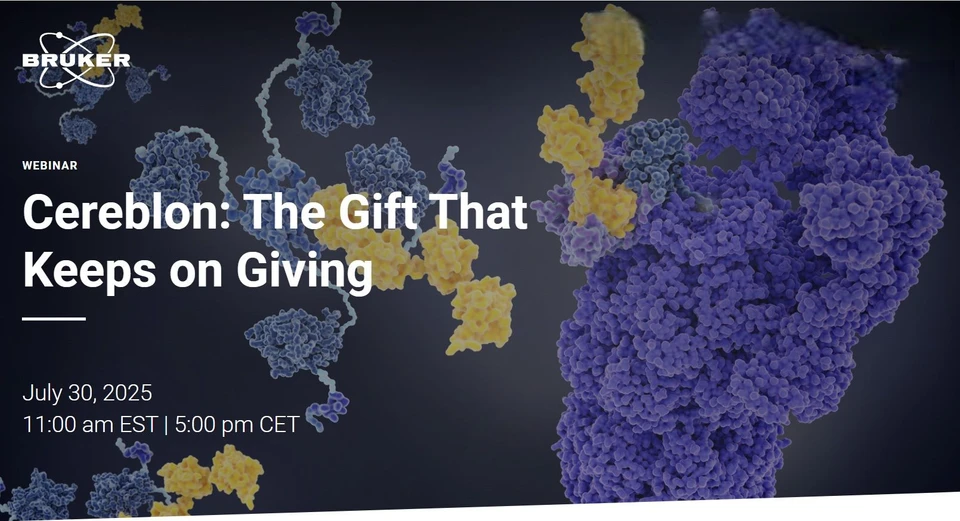
Small molecules that induce protein degradation via ligase-mediated ubiquitylation are emerging as a promising pharmacological class. Global expression analysis is the primary method for exploring the target space and selectivity of these molecules, leading to the degradation of numerous targets, including transcription factors and protein kinases.
Despite this progress, structural studies suggest thousands of potential IMiD targets remain undiscovered. To identify these elusive targets, we developed a high-throughput lysate-based IP-MS for unbiased identification of molecular glue targets of IMiD-CRBN. Our study offers a comprehensive catalog of CRBN-recruited targets (>290 targets) and introduces a scalable workflow for discovering new drug-induced protein interactions in cell lysates. This method enhances our understanding of the breadth and mechanisms of action of IMiDs, potentially opening new avenues for targeted therapy development.
Key Learning Objectives:
- Understand how chemoproteomic workflows can be applied to discover degrader and molecular glue targets in cell lysates
- Gain insights into CRBN’s reprogramming by IMiD compounds for targeted protein degradation
- Learn scalable strategies for high-throughput identification of ligase-recruited substrates using immunoprecipitation-mass spectrometry (IP-MS)
Who should attend:
- Researchers developing molecular glues or PROTACs for targeted protein degradation
- Scientists working in proteomics, chemical biology, or drug discovery
- Those interested in expanding ligandability of E3 ligases through chemoproteomic screening
Presenter: Katherine Donovan, Ph.D. (Managing Director, Fischer Labs at Dana-Farber Cancer Institute, Boston, Massachusetts, USA)
Katherine Donovan holds the position of Lead Scientist and Managing Director of Fischer labs within the Dana-Farber Cancer Institute/Harvard Medical School. Her doctoral research was conducted under Prof. Renwick Dobson at the University of Canterbury, New Zealand, with a focus on protein biochemistry and structural biology.
Katherine’s postdoctoral work began in 2016 in Prof. Eric Fischer’s lab, where she cultivated a keen interest in proteomics – a technique she uses to measure protein expression changes in response to various stimuli. She established and managed proteomics groups within both Fischer Lab and the Center for Protein Degradation, specializing in degrader screening and target identification. Her work has been pivotal in detecting the degradation targets of several molecules, notably uncovering SALL4 as the potential key to thalidomide’s teratogenic effects.
Katherine has co-headed extensive projects to delineate the degradable kinome and HDACome, and has launched a public degradation proteomics initiative to offer complimentary degrader target mapping to the scientific community. Her notable contributions to targeted protein degradation (TPD) research were honored with the Arvinas TPD Early Career Researcher Award in 2022.
Presently, she supervises and actively contributes to various projects in ligase biology and protein degradation while managing the Fischer lab and TPD proteomics operations under the Chemical Biology Program.


