

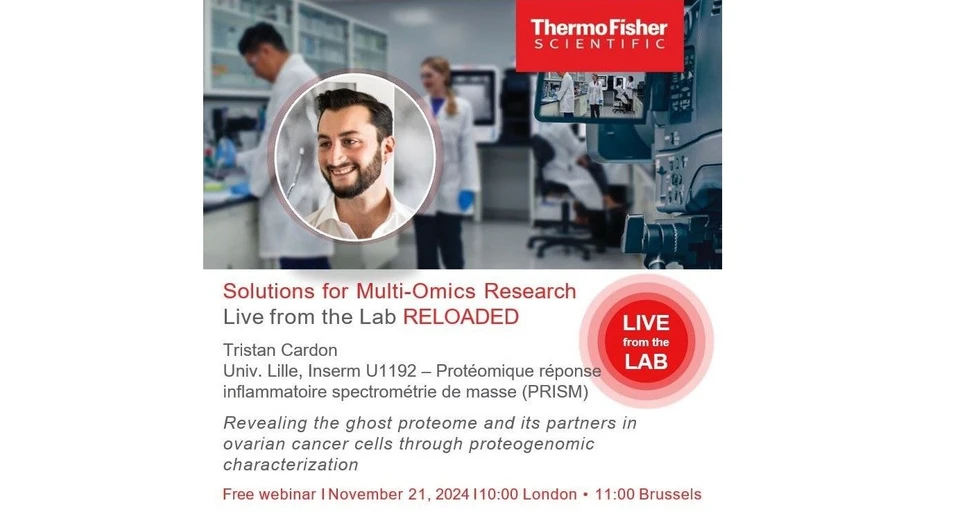
Revealing the ghost proteome and its partners in ovarian cancer cells through proteogenomic characterization
The research team has published two papers on their results with a non-terminal cell line and is currently revising their comprehensive data. They developed a specialized workflow to map interactions between COSMIC, alternative proteins, and reference proteins. Using cross-linking in large-scale analyses and literature information from databases like STRING, they enriched their reference protein network. Additionally, they performed GO term analysis to understand the functional roles of alternative proteins.
Their process involved creating a database with over 400,000 possible sequences, narrowing it down to 100,000 for more manageable analysis. They used various databases at different stages to ensure comprehensive interrogation. They successfully identified specific alternative proteins and their interactions with reference proteins, contributing to cell proliferation and other functions.
To validate their findings, they used modeling techniques and crystallographic information from reference proteins. Despite some alternative proteins not matching known domains, cross-linking provided valuable insights. This innovative approach allowed them to identify and confirm the functions of alternative proteins, offering significant contributions to the understanding of protein interactions and cellular functions.
Learning points:
- Workflow Development for Protein Interaction Mapping
- Database Management and Analysis
- Validation and Functional Analysis
Who should attend:
- Researchers and professionals in the fields of proteomics, genomics, and cancer biology, specifically those who are focused on protein interactions, alternative protein functions, and the development of innovative workflows for mapping these interactions.
- Bioinformaticians and molecular biologists interested in the implications of proteogenomics in disease mechanisms and biomarker discovery.
Presenter: Tristan Cardon (Univ. Lille, Inserm U1192 – Protéomique réponse inflammatoire spectrométrie de masse (PRISM))


