Colloidal Fingerprints of Food and Beverages with multidetector AF4-MALS
Food analysis is crucial for consumer safety, authenticity, and pollutant detection. Benchmark analytical methods use complex protocols and organic solvents, and more sustainable alternatives are to be sought out. A recent trend in analytical chemistry leverages raw data from experiments (e.g., chromatographic profiles, spectra) as sample fingerprints, analyzed with multivariate tools to predict characteristics (e.g., origin, composition) and identify adulterations. These approaches reduce analyses, lab work, and resource use, offering greener, more cost-effective alternatives.
The webinar will show how to combine the two aims, sustainability and data maximization, using an aqueous colloidal system, developing AF4-DAD-MALS-dRI-FLD platforms to separate and characterize components from food matrices:
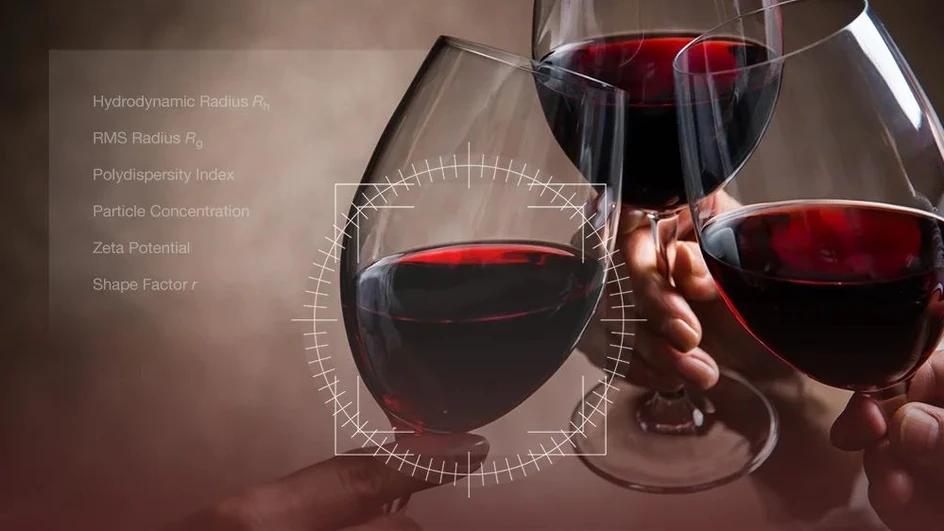
- Red wine profiling and in-depth analysis of output data can highlight particulate complexity, explain sensory feedback, and lead to cultivar grouping.
- Milk analysis and multivariate elaboration of fractograms enabled single-run discrimination of factors like thermal treatment, fat content, and even the manufacturing plant’s impact on colloidal content.
These AF4 method are fast, uses minimal sample preparation, avoid chemical treatments, offering a greener, faster and possibly cheaper alternative. The FFF approach can enhance food quality control and fraud detection processes and is adaptable to other colloidal food samples. Additionally, it underscores the need to increase multivariate analysis in data from FFF platforms.
Key Learning Objectives:
- Tackle native sample handling
- Understanding data extraction from multidetection profiling
- Rationalizing multivariate analysis of FFF data
Who Should Attend:
- Laboratory managers
- Chromatographers
- Scientist in the Food & beverage industry
Presenter: Valentina Marassi, Ph.D. (University of Bologna, byFlow srl)
Dr. Marassi is Tenure-Track Researcher and Assistant Professor in Analytical Chemistry at the University of Bologna. She graduated with a B.S. in chemistry, a Master’s in Organic Chemistry and completed a PhD in Analytical Chemistry in the same Institution. Her core research involves separation science and profiling-multidetection applied to nano-bio samples, and developing FFF-chemometrics strategies to model and understand colloidal profiles.
Presenter: Prof. Andrea Zattoni (University of Bologna, byFlow srl)
Andrea Zattoni joined the University of Bologna in 2006 and is currently an Associate Professor. He holds an M.S. in Chemistry and a Ph.D. in Chemical Sciences from the University of Bologna with a research focus on separation science. His main research interests include the fundamental and instrumental development of field-flow fractionation and its combination with highly sensitive and selective detection techniques.
Presenter: Udayabagya (Bud) Halim (Waters | Wyatt Technology)
Bud Halim is a senior marketing analyst at Wyatt Technology. He holds a B.S. and Ph.D. in physical chemistry from the UCLA. Bud started his career as an adjunct professor where he taught courses such as Biochem, Analytical, and Physical Chemistr. Prior to joining Wyatt Technology, Bud worked in the scientific instrumentation field as an applications scientist for three years. His experience spans the characterization of batteries, semiconductors, and the stability of biologics, LNPs, and viral vectors.