

The Extreme HPLC Technology Forum
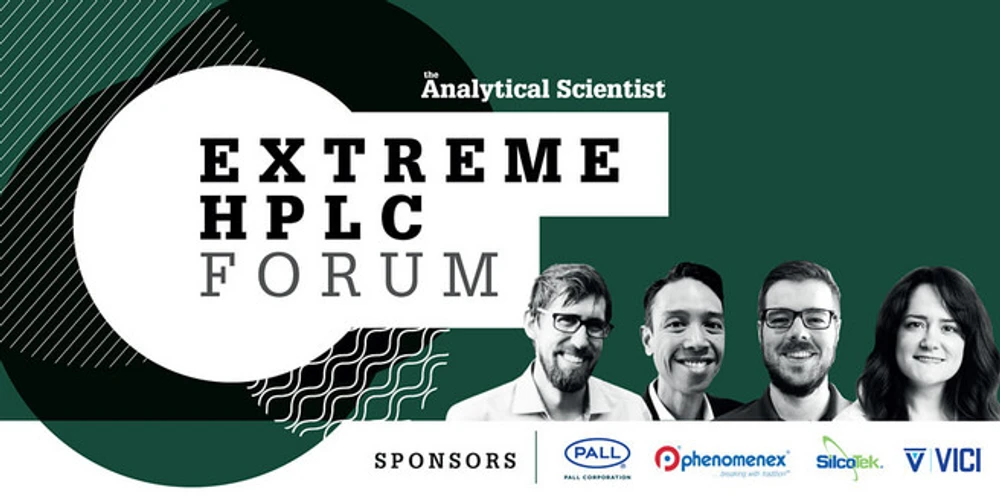
The analytical questions have become more complex, the samples more diverse and numerous, and the demand for sensitivity ever greater. Fortunately, fresh insight and new technologies are rising to meet the challenges – pushing the limits of what’s possible with HPLC.
Sharing innovation updates, applications, and words of wisdom, our four technology providers will take you to the extreme edges of HPLC in terms of accuracy, robustness, and sample size – giving you new options to solve your (extreme) analytical challenge.
Agenda
Craig Tamble (Application Scientist, Pall) promises to improve the accuracy of your HPLC analyses – while extending the life of your column.
Extend column life by up-to 52x and increase the accuracy of results by using the right device to prepare your samples prior to performing HPLC and UHPLC. Pall Laboratory provides non-sterile syringe filters with a selection of membranes, for various aqueous, organic, non-aggressive, and solvent-based samples. This session will go over what to look for in a filter, and why you should always prepare your samples prior to performing chromatography.
Brian Rivera (Senior Product Manager, Biologics, Phenomenex) introduces Pore Controlled Technology to help you improve SEC method robustness and transferability for routine aggregate analysis of mAbs.
Size Exclusion Chromatography (SEC) is a well-established analytical method for quantitative and qualitative aggregate analysis of monoclonal antibodies (mAbs) and other related biotherapeutics. However, developing a robust, transferable SEC method for routine testing can be challenging for any analytical development laboratory. The root cause of the systemic failures and variability are less than ideal pore volumes. In this brief presentation, we discuss Pore Controlled Technology (PCT) and how that can improve method robustness and transferability for routine aggregate analysis of mAbs and other mAb formats.
Jesse Bischof (R&D Scientist, SilcoTek Corporation) questions the very nature of “high performance” when it comes to some commonly used HPLC materials by delving into the dangers of metal ion leaching.
Jesse Bischof will present his research detailing how metal ion leaching is preventing accurate and reliable analysis in a variety of common HPLC surfaces. Dr. Bischof’s findings explain how harmful contamination affects the chromatography community as well as the importance of a bio-inert flow path. Materials that were once considered ‘high performing’ such as stainless steel, titanium, Hastelloy, and Alloy MP35N will be put to the test during this presentation and the results are sure to change how HPLC systems are built.
Jennifer Copeland (LC Product Manager, VICI - Valco Instruments) cuts us all down to size with a dedicated UHPLC system for single-cell analysis and below…
Nanofluidics with Chromatographic Tools: Large scale proteomics analyses of full organisms or metabolic chains provides vital information for systems biology and metabolism. To investigate on the single-cell level, researchers need small-scale studies on nanogram sized samples. For the separation capabilities of LC on single-cell or smaller samples, there is a necessary reduction of size. The industry has been using fused silica capillaries for a long time. We have incorporated that into a single UHPLC unit, for separation on a small scale, with valves and pumps to connect directly to the capillary.
PLUS Live Q&A Session
Finally, our four experts will try to help you solve your extreme analytical challenge by answering your specific questions.


